
Freedom of Navigation

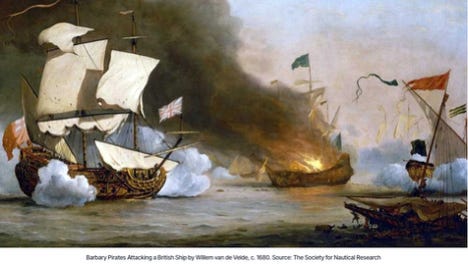
The Barbary Pirates operated out of North Africa from approximately 1500 to 1800, capturing and enslaving an estimated 1.25 million Europeans. Between just 1609 and 1625 they captured 466 British ships. With the lifeblood of trade under siege, European nations agreed to pay tribute for free passage.
The pirates reign of terror inspired the formation of the US Marines, who attacked Tripoli in 1804. The British and Dutch attacked in 1816, but the threat was only ended when France invaded Algeria in 1830.
Last night, The US and Iran agreed to a ceasefire that appears to include the right of Iran to charge tolls for passage through the Strait of Hormuz. This raises the question – have we passed beyond the era of freedom of navigation dating back to Spanish rule of the seas in the fourteenth century and currently enshrined in the United Nations Convention on the Law of the Sea (UNCLOS)?
What might this world look like? Turkey charging for passage through the Dardanelles, Denmark and Sweden charging for passage between the Baltic and North Seas, France and England charging for passage through the English Channel, Malaysia and Indonesia charging for passage through the Straits of Malacca, Spain and Morocco charging for passage through the Strait of Gibraltar, Panama and/or the US charging higher fees for certain nations to transit the Panama Canal? The list goes on and on.
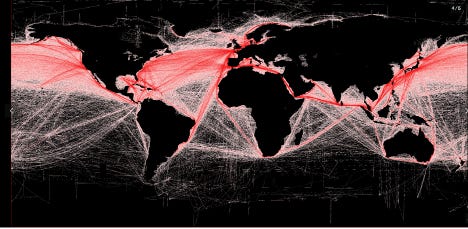
Who would benefit and who would suffer under this regime?
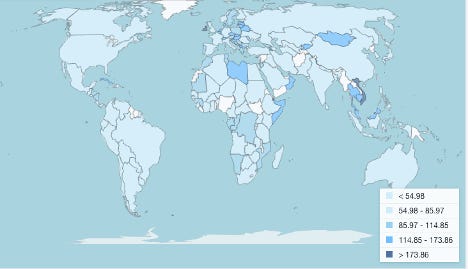
Clearly, nations controlling choke points would benefit both financially and strategically. Countries relying on international trade would suffer higher import costs and lower profit margins and/or volumes on exports. Generally, the World’s small nations rely most heavily on trade, with concentrations in Southeast Asia and Central Europe.
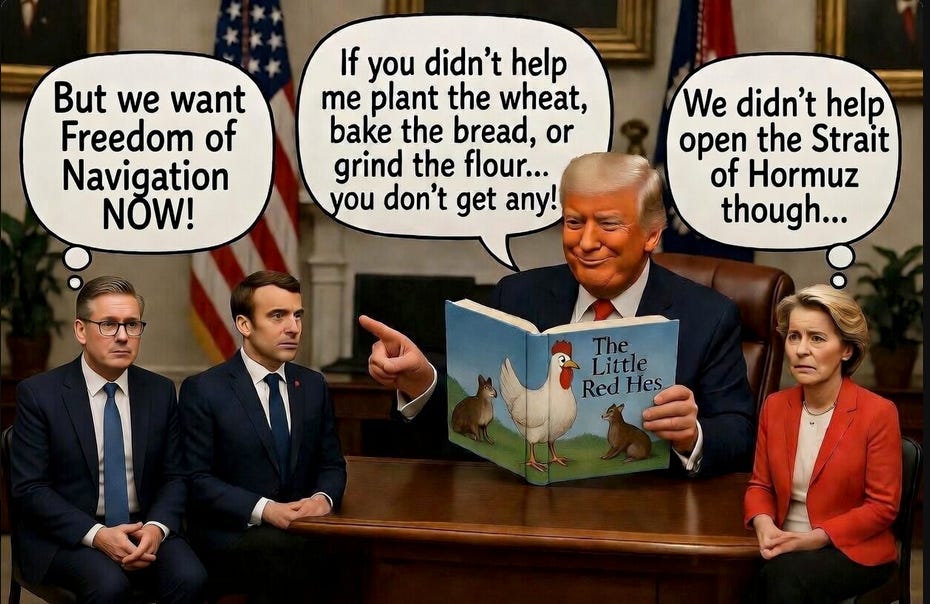
President Trump asked for help with opening the Strait of Hormuz, but no nation stepped forward. If the US is no longer able/willing to enforce international law, will someone else step into this role - the UN, China, the EU?
While it is too early to tell where this is going, we certainly live in interesting times.
Freedom of navigation shocks tend to operate as transmission channels rather than isolated events. When risk rises around Hormuz, the signal typically propagates through energy pricing first and then into inflation expectations and financial conditions.
Great questions Jim. You also made me think about inland river ways on which multiple countries rely.